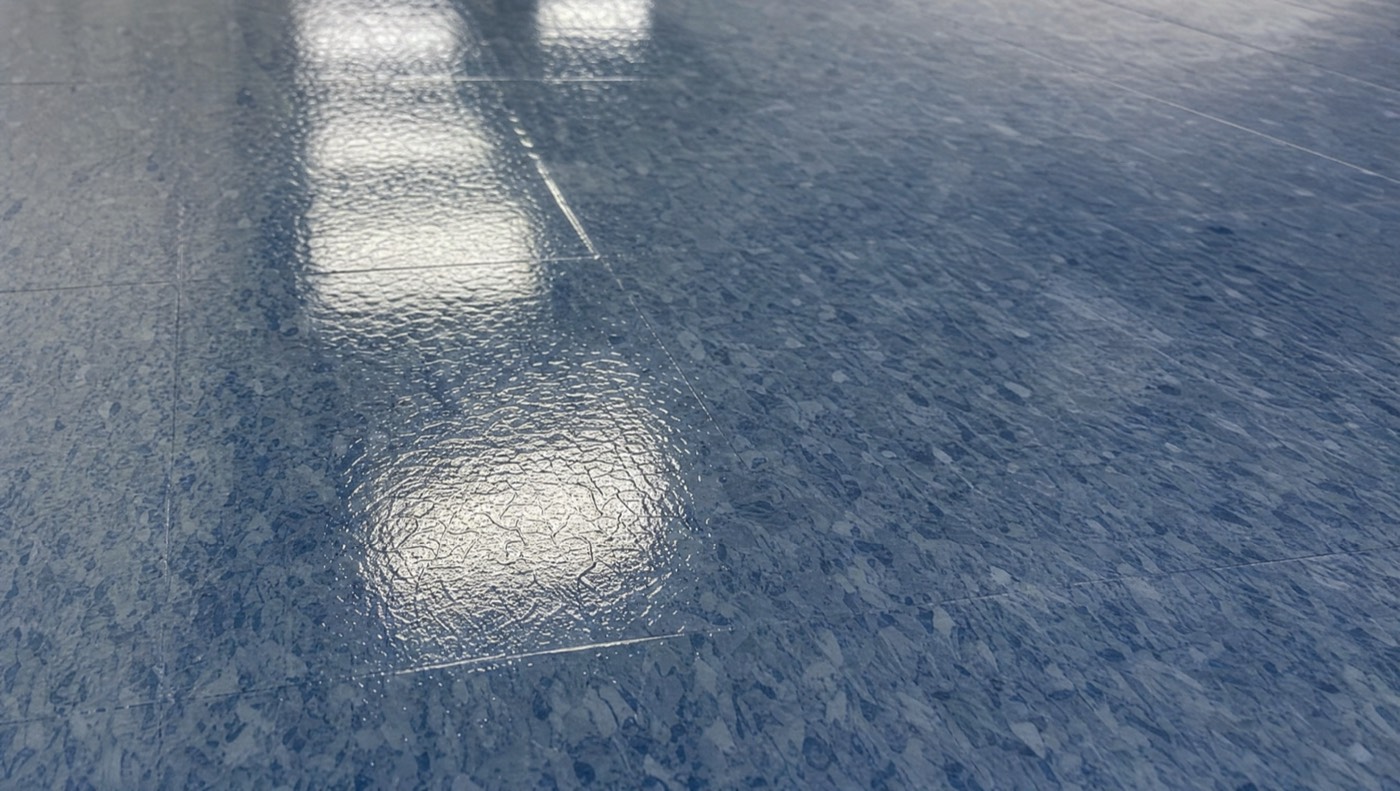
Two floors can use the same finish and look completely different, because sheen is a choice. Glossy says crisp and well-kept; matte says modern and understated. Neither is more durable than the other, so the decision comes down to the look you want and how the floor will be maintained.
| Sheen | Look | Reads as |
|---|---|---|
| Matte | Flat, no shine | Modern, understated, low glare |
| Satin | Soft, low sheen | Contemporary, warm |
| Semi-gloss | Moderate shine | Balanced, practical |
| Gloss | Clear, bright shine | Clean, professional |
| High-gloss | Wet-look, mirror-like | Polished, high-maintenance look |
The bigger practical difference is upkeep. A high-gloss floor is held at that shine by regular burnishing, so the look depends on a maintenance rhythm. A matte floor needs less burnishing to keep its appearance, but it shows dust and films differently and still needs proper cleaning. Both are recoated and, eventually, stripped on the same logic, sheen does not change the underlying strip and wax cycle.
| Gloss | Matte | |
|---|---|---|
| Shows dust and footprints | More visible on the reflection | Hides some, but shows film differently |
| Glare | More, under bright light | Less, easier on the eyes |
| Slip resistance | Driven by the product and moisture, not the sheen. A glossy floor is not inherently more slippery. See slip resistance. | |
Sheen is not durability. The same finish can be left matte or burnished to high gloss; the protection comes from the build of coats, not the shine. So choose on appearance and upkeep: pick gloss if you want the bright, classic, unmistakably-clean look and can maintain a burnishing rhythm; pick matte or satin if you want a modern, low-glare feel with less burnishing. And it is reversible, a floor can be taken from gloss toward matte or built back up to gloss on the next service.
Related: floor finish types, buffing and burnishing, slip resistance, and how many coats.
Want help choosing a sheen and a finish? Get a free floor assessment.
Sheen, how reflective the surface is. Gloss is bright and reflective; matte is flat and low-glare. The finish underneath can be the same; the look differs.
Neither is better, it is a design and maintenance choice. Gloss gives the classic clean look and needs regular burnishing; matte is modern and needs less.
It shows dust and footprints more in its reflection, while matte hides some of that but reveals films differently. Both need proper cleaning.
Slip resistance comes from the product and from moisture, not the sheen. A glossy floor is not inherently more slippery than a matte one.
Matte generally needs less burnishing to hold its look; gloss requires a regular burnishing rhythm to stay bright. Both follow the same recoat and strip cycle.
No. Durability comes from the build of finish coats, not the gloss level. The same finish can be matte or high-gloss with the same protection.
Schools, healthcare, and traditional retail often favor gloss for the clean look; design-forward offices and boutiques often choose matte or satin. It is a brand and design call.
Yes. Sheen can be adjusted on the next service, taking a floor toward matte or building it back to gloss, so the choice is not permanent.
This guide should support both education and conversion: define the issue clearly, explain when the topic affects strip-and-wax, scrub-and-recoat, VCT care, burnishing, polishing, sealing, or maintenance programs, and point the reader to quote, cost, facility, and provider pages where the next step belongs.
Facility type, floor material, square footage, current condition, service needed, timing, access window, photos, traffic areas, safety concerns, and decision-maker contact details.
Photos are optional but helpful. A remote video walkthrough is a convenience option when condition or access is hard to explain. Larger schools, hospitals, universities, municipalities, portfolios, and complex projects may still need an in-person walkthrough.
Strip&Wax.com builds coverage carefully by collecting real facility requirements, provider service areas, capability details, and quote outcomes. The site focuses on accurate scope, clear expectations, and useful commercial floor-care guidance before an opportunity is routed.
Use these related pages to compare services, understand cost, plan facility-specific work, and route the right commercial floor-care opportunity.
A strong request gives a commercial floor-care team enough context to understand the building, the surface, the deadline, and the condition of the floor without making the form hard to finish.
Use this page to move from a general floor-care question into the right quote path. Commercial floor work gets easier to price when the buyer identifies the facility type, floor material, condition, timing, and project goal.
Matte vs. Gloss Floor Finish: Which Sheen Is Right for Your Space? supports the buyer before they request pricing. A useful floor-care guide should help a facility manager understand what to look for, what to photograph, what questions to ask, and which service page to use next. It should also connect the reader to quote-ready pages instead of leaving them at a dead end after reading the article.
The commercial value is in converting research intent into a quote request. When the reader knows whether they need stripping and waxing, scrub-and-recoat, burnishing, floor maintenance, VCT care, tile-and-grout work, or another service, the next click should be obvious and close by.
Do not wait until every detail is perfect. Start the quote request with the basics, then add photos, measurements, floor type, or walkthrough notes when available. Larger schools, hospitals, municipal buildings, retail stores, warehouses, and multi-location properties can add scope details during follow-up.
Request a floor-care quoteTell us your facility, floor types, and square footage. We'll scope the work and send a written quote. Not sure what you have? Send a photo and we'll tell you.