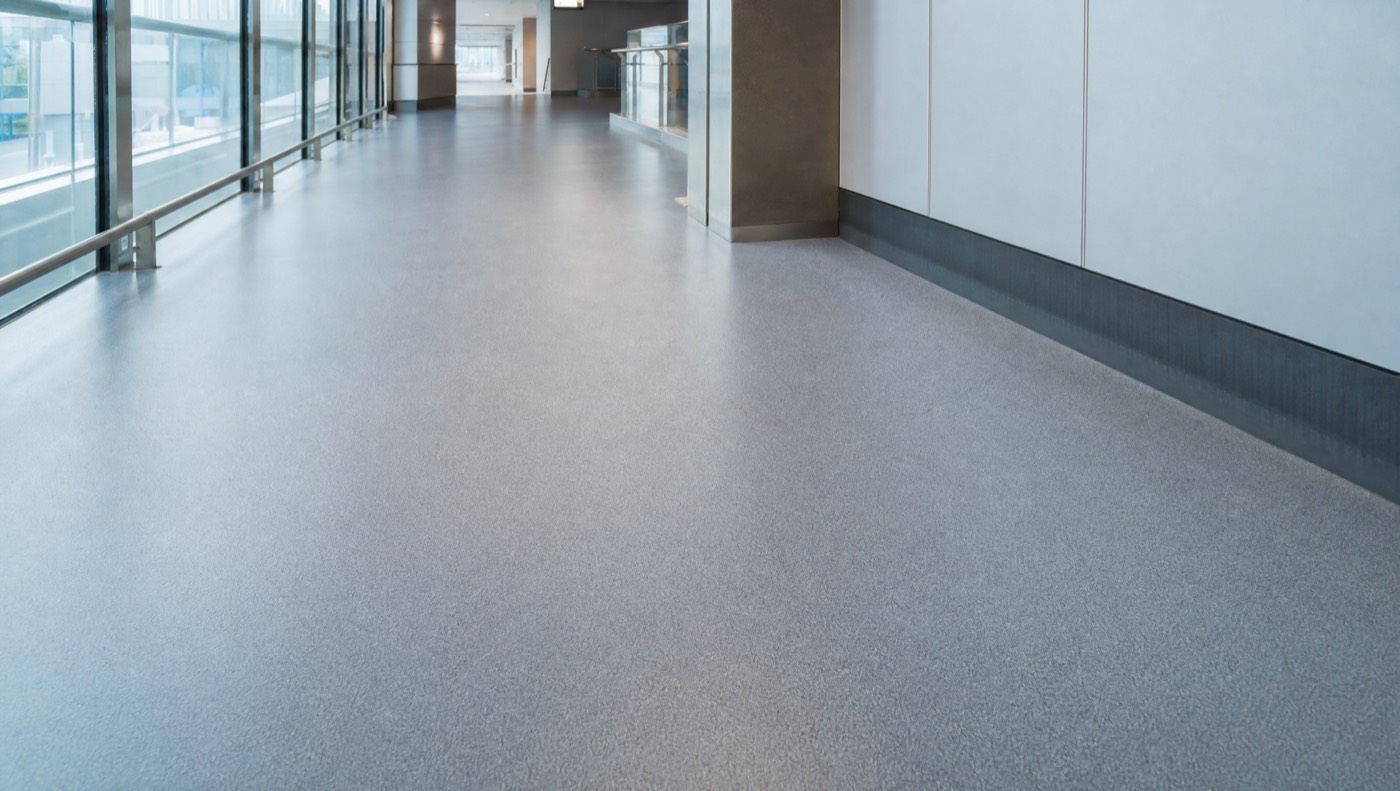
If your floors get stripped and waxed in a school, a clinic, or any occupied building, the smell people complain about is largely VOCs. Low-VOC floor care reduces that off-gassing, and on a lot of sites it is no longer optional. Here is what VOCs are, where they come from in floor care, and how a low-odor job is run.
Volatile organic compounds are carbon-based chemicals that evaporate into the air at room temperature. In floor care they come off as the strong smell during and after a strip and wax. Beyond odor, elevated VOC levels are an indoor air-quality concern, which is why occupied buildings, schools, and healthcare facilities increasingly require low-VOC products and why green building programs limit them.
| Product | VOC source | |
|---|---|---|
| Floor finish (wax) | Coalescing solvents that help the film form | |
| Floor stripper | Solvents and amines in the formula | |
| Sealers | Solvent carriers in some products | |
| Cleaners | Solvents in some general-purpose cleaners |
Each step can be swapped for a lower-VOC equivalent, with the finish and stripper mattering most.
For sensitive sites this pairs with our school floor care approach.
Not anymore. Early low-VOC finishes lagged on gloss and durability, but modern products perform at or near conventional finishes when applied correctly. They can need slightly more attention to dry time and technique, which is a fair trade for usable air in an occupied building. Performance comes down to the product plus the application, not the VOC level alone.
Related: odor control, floor stripper types, floor finish types, and school floor care.
Need a low-odor strip and wax in an occupied building? Get a free floor assessment.
Volatile organic compounds, solvents in some finishes, strippers, and sealers that evaporate into the air and cause the strong odor during and after floor work, plus air-quality concerns.
To reduce odor and indoor air-quality impact, which matters most in occupied buildings, schools, and healthcare, and to meet green building and procurement requirements.
Modern low-VOC finishes perform at or near conventional ones when applied correctly. They may need a bit more attention to dry time and technique.
An independent certification for lower-environmental-impact products. Green Seal and UL Ecologo certified floor-care products are common choices for green and occupied-building programs.
You can greatly reduce it with low-VOC chemistry, after-hours or break scheduling, ventilation, and sectioning, though some residual odor during cure is normal.
Using certified low-VOC products can contribute toward LEED credits as part of a green cleaning and materials approach.
Low-VOC refers to reduced volatile compound content; low-odor describes the experience. They usually go together, but a product can be one without fully being the other.
They are chemicals that require correct handling, PPE, and ventilation. Low-VOC products reduce exposure and odor, but all floor-care chemicals should be used per their safety data sheets.
This guide should support both education and conversion: define the issue clearly, explain when the topic affects strip-and-wax, scrub-and-recoat, VCT care, burnishing, polishing, sealing, or maintenance programs, and point the reader to quote, cost, facility, and provider pages where the next step belongs.
Facility type, floor material, square footage, current condition, service needed, timing, access window, photos, traffic areas, safety concerns, and decision-maker contact details.
Photos are optional but helpful. A remote video walkthrough is a convenience option when condition or access is hard to explain. Larger schools, hospitals, universities, municipalities, portfolios, and complex projects may still need an in-person walkthrough.
Strip&Wax.com builds coverage carefully by collecting real facility requirements, provider service areas, capability details, and quote outcomes. The site focuses on accurate scope, clear expectations, and useful commercial floor-care guidance before an opportunity is routed.
Use these related pages to compare services, understand cost, plan facility-specific work, and route the right commercial floor-care opportunity.
A strong request gives a commercial floor-care team enough context to understand the building, the surface, the deadline, and the condition of the floor without making the form hard to finish.
Commercial floor-care buyers are usually trying to protect a facility, prepare for traffic, improve presentation, control safety risk, or restore floors before a deadline. The best quote requests connect the floor problem to the service, floor type, facility type, schedule, and access requirements.
High-value requests often include thousands of square feet, multiple rooms, heavy traffic lanes, old finish buildup, school or healthcare scheduling windows, retail entrances, warehouse walkways, municipal procurement steps, or a multi-location maintenance need. The buyer should understand that price changes with condition and access, not just square footage.
Useful quote notes include the facility type, floor material, current condition, deadline, preferred service window, whether furniture or shelving must move, whether the building needs low-odor products, and whether photos or a remote walkthrough can show the problem better than a written description.
Use the links below to compare scrub vs strip, review VCT floor care, check industry examples, estimate pricing with the cost calculator, or request a quote.
Use these resources to narrow the request into the right service, surface, and facility type: commercial floor waxing, floor stripping and waxing, VCT maintenance, scrub-and-recoat, burnishing, school floor care, healthcare floor care, retail floor care, and industrial floor maintenance. The buyer does not need every technical term before submitting the request.
Use this page to move from a general floor-care question into the right quote path. Commercial floor work gets easier to price when the buyer identifies the facility type, floor material, condition, timing, and project goal.
Low-VOC Floor Care: What It Means and When It Matters supports the buyer before they request pricing. A useful floor-care guide should help a facility manager understand what to look for, what to photograph, what questions to ask, and which service page to use next. It should also connect the reader to quote-ready pages instead of leaving them at a dead end after reading the article.
The commercial value is in converting research intent into a quote request. When the reader knows whether they need stripping and waxing, scrub-and-recoat, burnishing, floor maintenance, VCT care, tile-and-grout work, or another service, the next click should be obvious and close by.
Do not wait until every detail is perfect. Start the quote request with the basics, then add photos, measurements, floor type, or walkthrough notes when available. Larger schools, hospitals, municipal buildings, retail stores, warehouses, and multi-location properties can add scope details during follow-up.
Request a floor-care quoteTell us your facility, floor types, and square footage. We'll scope the work and send a written quote. Not sure what you have? Send a photo and we'll tell you.